Demo guide: mixing, kneading, proving and baking one everyday loaf.
On this page
Overview
This published, non-clinical demonstration makes one loaf in a roughly 900 g loaf tin. Allow around three hours, including rising and baking, plus cooling time. The dough’s appearance matters more than the clock.
Ingredients and equipment
Ingredient
Amount
Strong white bread flour
500 g
Water, lukewarm
320 g
Instant yeast
7 g
Fine salt
10 g
Olive oil
15 g, plus a little for the tin
Method
1
Mix and knead
Stir together the flour, yeast and salt in the bowl.
Add the water and oil. Mix until no dry flour remains.
Knead on a clean worktop for about 8–10 minutes, until the dough feels smoother and elastic.
2
First rise
Return the dough to the bowl and cover it. Leave until noticeably expanded and approximately doubled in size, often 60–90 minutes in a moderately warm kitchen.
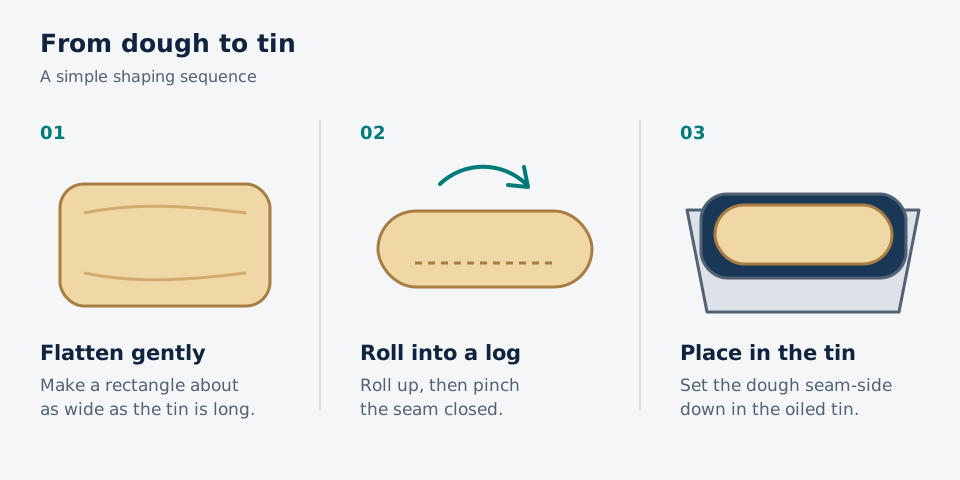
Figure 1. Shaping a tin loaf after the first rise. Cover the shaped dough and allow it to prove before baking.
Credit: Praxis demonstration illustration
Lightly oil the tin.
Gently flatten the dough into a rectangle about as wide as the tin is long.
Roll it into a firm log, pinch the seam closed and place it seam-side down in the tin.
Cover and leave until puffy, usually another 30–60 minutes. Begin preheating the oven to 220°C conventional / 200°C fan during this rise.
4
Bake
Bake for 30–35 minutes, until the crust is a deep golden brown. Turn the loaf out carefully; if the sides are pale, return it to the oven without the tin for a few more minutes.
5
Cool and serve
Cool on a rack for at least an hour before slicing. Cutting while very hot can compress the soft crumb and make it seem gummy.
Troubleshooting
What you notice
What to try next time
Dense, tightly packed crumb
Allow more rising time and check that the yeast is active.
Dry, heavy dough
Weigh the water and use less flour on the worktop.
Pale sides
Remove the tin for the last few minutes of baking.